Japanese Pokémon Card Condition: A Guide to Buying Raw Cards
Learn Japanese condition terms, request useful photos and compare raw Pokémon cards. Six checks for buyers, without predicting a future PSA grade.


Market data
Market data in this article changes from time to time. Figures are dated where shown and are not a current price list.
When buying a raw Japanese Pokémon card, examine the particular copy being offered, not just its name or condition label. Here, raw means sold without a documented professional grade; it does not mean new, flawless or never previously submitted. Identify the version, request clear photographs and decide which imperfections fit your collecting goal.
A seller's description is not a grading score
Read A, S and NM (Near Mint) alongside the seller's own definitions. Do not build a universal conversion between these labels and PSA grades or assume two shops use identical standards. Request the condition policy and the particular copy's disclosed flaws. A general label does not answer a specific question about a white spot, scratch or dent.
Separate identification from condition: the card name, number, set code and language identify the item; photographs and notes describe the copy. For a promo, use our Japanese promo guide to identify the version before comparing condition.
Japanese words to recognize in a listing
This editorial glossary helps you read descriptions; it is not a PSA grading scale. Context and the defect's location matter.
- 未鑑定 — unassessed or ungraded; clarify what the seller has checked.
- 美品 — a favourable appearance description, not a standardized score.
- 傷 / キズ — scratches or damage; ask where they occur.
- 白かけ — white chipping or whitening at edges and corners.
- スレ — scuffing or surface rubbing.
- 凹み — a dent or local indentation.
- 折れ — a crease or fold.
- 反り — curvature or warping; not necessarily a crease.
- 日焼け — fading attributed to sun exposure.
Ask the seller to identify the described area. A word alone does not tell you the defect's size, whether it is on the front or back, or how noticeable it is under ordinary light.
Six checks for photographs of the exact copy
- Match photographs to the copy. Confirm they are not catalogue images or a representative example. If several copies are offered, ask which one you would receive and save its photographs.
- Request the complete front and back. Look for sharp, straight photographs with the whole card visible. Cropping or glare can obscure an area you care about. Request another view when something is unclear.
- Inspect all four corners. Enlarge each corner on both sides. If a white spot could be a reflection, request another photograph rather than immediately deciding what it is.
- Follow all four edges. Do not examine only the centre. Compare visible pale areas, chips or missing material, and ask whether there are additional defects outside the photographs.
- Request another lighting angle. An angled view may help reveal a surface mark, indentation or curvature. It does not guarantee that every defect will appear; a sleeve or holder can also create reflections.
- Resolve uncertainties in writing. Ask a focused question about each unclear area and compare the answer with the description. Check the procedure for receiving an item in a different condition than agreed, and retain the correspondence.
Two copies of one card: an illustrative comparison
Imagine two sellers offering the same Japanese version. The first copy looks clean on the front photograph, but the seller discloses whitening at a rear corner. The second looks better on the back, but a front scratch appears under angled light. Neither automatically wins: someone displaying the illustration in a binder may prefer differently from someone seeking consistent appearance on both sides.
Write down each copy's known flaws and unanswered questions. Compare after obtaining photographs of similar quality. This is a buying exercise, not a valuation or forecast of a future grade.
Match condition to your purpose
For a binder collection, decide which imperfection would bother you whenever you looked at the card. For a card intended for play, consider your own tolerance for wear and later replacement. These are buying considerations, not a ruling on tournament legality. If grading is your goal, leave the eventual score unresolved.
PSA's standards discuss corners, original gloss, printing, centering and alterations. A seller's description is not a professional score. Continue with our grading and certification guide; consult PSA's official FAQ for service questions.
Frequently asked questions
Does NM guarantee PSA 10?
No. Ask how the seller defines NM. Do not turn that label into a promise about a future inspection.
Do photographs prove authenticity?
No. They help you examine visible details and ask questions, but cannot replace professional authentication or guarantee that every flaw is visible.
What if an important area is not clearly photographed?
Request a focused photograph and leave the decision open until you have enough information. You do not need to guess to complete a purchase.
For an individual-card enquiry, use our singles enquiry page with the requested version and condition requirements. An enquiry does not confirm availability.
PulloraX editorial buying guidance. PSA sources checked on 4 October 2026.
Can cleaning or pressing affect a Pokémon card's PSA result?
Yes. PSA lists crease pressing and certain surface or chemical treatments among reasons it can return a card without a numerical grade. An improved appearance does not establish that a raw Japanese Pokémon card is unaltered. PSA — official English standard.
What do N5 and N7 mean on a PSA report?
N5 identifies altered stock. Examples in the English standard include crease pressing, scratch removal, enhanced gloss and substances added to the surface. PSA — official English standard.
N7 identifies evidence of cleaning. The Japanese standard also describes chemical cleaning, including stain removal. N5 and N7 are codes for a result without a numerical grade, not grades of 5 and 7. PSA — official Japanese standard.
What does Authentic Altered mean?
PSA's English standard allows some cards with these alteration findings to be encapsulated as Authentic Altered, subject to its stated submission conditions and the grader's discretion. This is not a numerical condition grade. The Japanese page reviewed does not state the same option. PSA — official English standard.
What treatment history should you ask the seller for?
PulloraX buying advice: ask whether this copy has been pressed, chemically cleaned, recolored or restored. Request details and the full grading report, if available. When comparing offers, keep raw cards, numerically graded cards and cards labelled as altered in separate groups. A holder and a clean appearance do not replace reading the exact result.
How to read the card's grade and certificate.
For a single-card enquiry, include your condition and treatment-history requirements.
PSA's English and Japanese standards checked on 7 October 2026. The examples concern the treatments those standards specify, not every action called cleaning.
From the PulloraX vault
Sealed boxes in stock now
The sets mentioned in this guide, as Japanese factory-sealed boxes. Shipped tracked from the PulloraX vault.
-
 SV2a · In stock
Pokémon Card 151 SV2a Japanese Booster Box
View the box →
-
 SV8a · In stock
Terastal Festival ex SV8a Japanese Pokémon Booster Box
View the box →
-
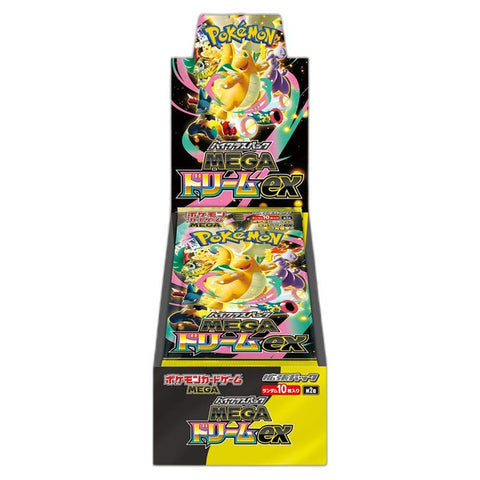 M2a · In stock
Mega Dream ex M2a Japanese Pokémon Booster Box
View the box →
-
 SV4a · In stock
Shiny Treasure ex SV4a Japanese Pokémon Booster Box
View the box →


Set files mentioned in this guide
More set files
PulloraX Magazine
Ready to start?
From the PulloraX vault · Japanese print · Tracked FedEx shipping
Card images are shown for identification. The cards, the characters and the artwork are trademarks and copyright of their respective owners. PulloraX is an independent retailer.